.png)
More Than Words: Understanding the Real Impact of Speech Therapy
- Rachel Verducci
- 3 days ago
- 4 min read

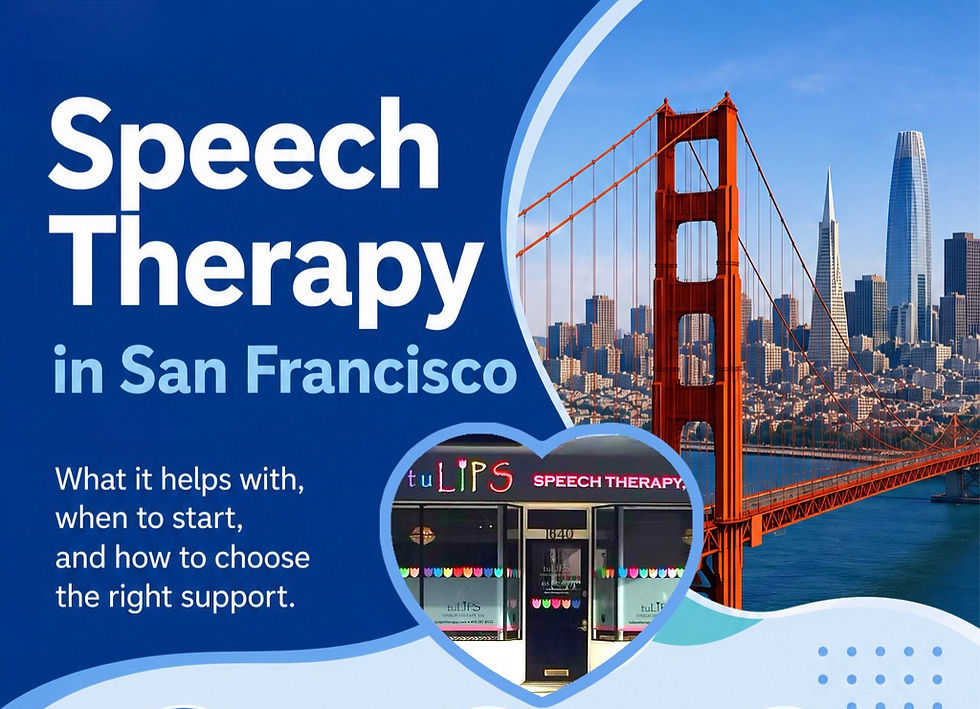
Communication shapes how we connect with the world around us. It influences relationships, confidence, learning, work, independence, and everyday life. Yet many people are surprised to learn just how broad the scope of speech therapy really is.
According to the American Speech-Language-Hearing Association, millions of Americans experience challenges related to speech, language, voice, fluency, cognitive-communication, or swallowing disorders each year (ASHA, n.d.). These challenges can affect people of all ages — from toddlers learning first words to adults recovering communication skills after illness or injury.
At tuLIPS Speech Therapy, we support children, teens, adults, and seniors across San Francisco, Piedmont, and surrounding Bay Area communities with personalized, compassionate speech therapy designed around real-life communication needs.
Speech Therapy Supports More Than Pronunciation
Many people think speech therapy only focuses on pronunciation or articulation. In reality, speech-language pathologists help individuals strengthen a wide range of communication skills.
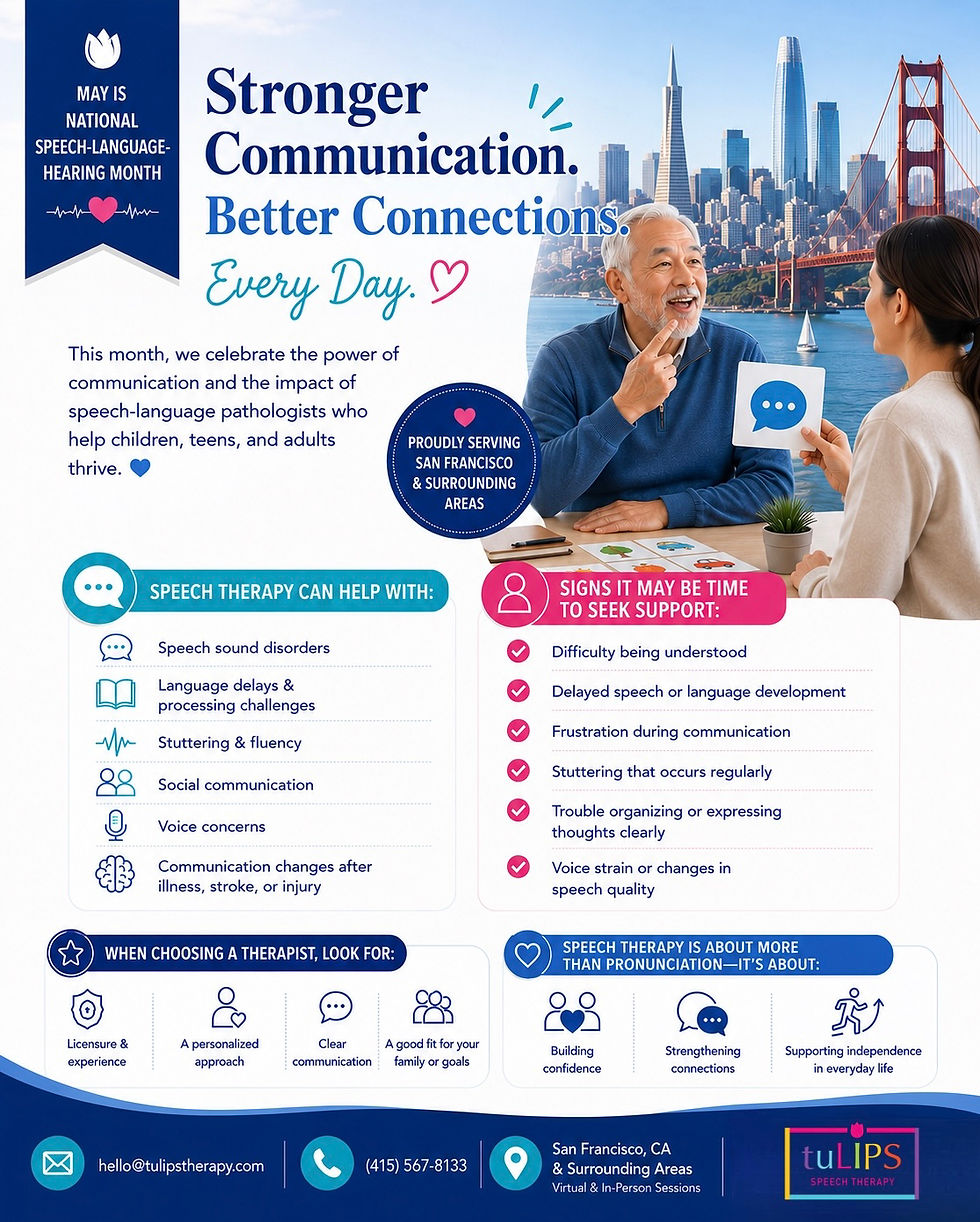
Speech therapy may support:
- Speech sound disorders
- Language delays and language processing challenges
- Stuttering and fluency disorders
- Social communication difficulties
- Voice concerns
- Cognitive-communication changes after illness, stroke, or injury
- Executive functioning and communication organization skills
Communication difficulties can look very different depending on the person. For some, it may involve trouble expressing thoughts clearly. For others, it may show up as frustration during conversation, difficulty understanding language, or anxiety around speaking in social settings.
Speech therapy is designed to help individuals communicate more effectively, confidently, and comfortably in daily life.
Signs It May Be Time to Seek Support
Communication challenges are not always immediately obvious. Sometimes they develop gradually over time. Other times, they show up through frustration, withdrawal, or reduced confidence in social and academic situations.
Some common signs it may be time to explore speech therapy include:
- Difficulty being understood by others
- Delayed speech or language development
- Frustration during communication
- Stuttering that occurs regularly
- Trouble organizing or expressing thoughts clearly
- Voice strain or noticeable changes in speech quality
- Difficulty following conversations or instructions
- Social communication challenges with peers or coworkers
Research from the National Institute on Deafness and Other Communication Disorders emphasizes that early identification and intervention can significantly improve communication outcomes and long-term confidence (NIDCD, n.d.).
When communication begins affecting confidence, relationships, school, work, or daily functioning, support can make a meaningful difference.
Communication Confidence Matters at Every Age
Speech therapy is not only for children. Communication needs evolve throughout life, and support can be valuable at any stage.
Children:
Children may need support with:
- Speech sound production
- Early language development
- Social communication skills
- Following directions and understanding language
Early intervention can help children build stronger foundations for learning, emotional regulation, and peer interaction.
Teens:
Teenagers often face increasing social and academic communication demands. Therapy may help with:
- Social confidence
- Conversational skills
- Language organization
- Classroom participation
- Self-advocacy
Adults:
Adults may seek therapy for:
- Stuttering or fluency concerns
- Voice strain
- Communication recovery after stroke or injury
- Professional communication skills
- Cognitive-communication changes
Seniors:
Speech therapy can also support seniors experiencing communication changes related to aging, neurological conditions, or medical events.
At every stage of life, communication plays a critical role in connection and independence.
There Is No One-Size-Fits-All Approach
One of the most important things to understand about speech therapy is that effective treatment should never feel generic.
Some individuals thrive with in-person support, while others benefit from the flexibility and comfort of virtual speech therapy from home. Some clients respond best to structured exercises, while others make progress through play-based learning, conversational practice, or real-world communication activities.
At tuLIPS Speech Therapy, therapy plans are personalized based on:
- Individual goals and communication needs
- Age and developmental stage
- Family and lifestyle considerations
- Academic or professional demands
- Personality and learning style
- Cultural and linguistic background
Research consistently shows that individualized, client-centered intervention leads to stronger engagement and better therapy outcomes (Roberts & Kaiser, 2011).
Therapy Is About Feeling Heard and Empowered
Speech therapy is not simply about pronunciation.
It is about helping people feel heard, understood, connected, and empowered in everyday life.
Sometimes progress looks like clearer speech. Sometimes it looks like participating more confidently in conversation, raising a hand in class, speaking up at work, or simply feeling less frustrated when communicating with loved ones.
Those moments matter deeply.
At tuLIPS, we believe therapy should feel supportive, encouraging, and deeply human. Communication growth is not about perfection — it is about building confidence and helping individuals feel more comfortable expressing who they are.
Speech Therapy in San Francisco and the Bay Area
If you are searching for speech therapy in San Francisco, Piedmont, or the surrounding Bay Area, finding the right provider matters.
A strong therapy relationship is built on trust, compassion, expertise, and individualized care.
At tuLIPS Speech Therapy, we provide both in-person and virtual speech therapy services designed to meet individuals and families where they are. Whether you are navigating speech delays, language challenges, stuttering, social communication concerns, or communication changes after illness or injury, our team is here to support you with thoughtful, evidence-based care.
If you have been wondering whether speech therapy could help you or someone you love, this may be your sign to start the conversation.
Because every voice deserves to feel heard.
Works Cited:
American Speech-Language-Hearing Association. (n.d.). Speech and language disorders. https://www.asha.org/public/speech/disorders/
American Speech-Language-Hearing Association. (n.d.). Communication disorders. https://www.asha.org/
National Institute on Deafness and Other Communication Disorders. (n.d.). Voice, speech, and language. https://www.nidcd.nih.gov/health/voice-speech-and-language
National Institute on Deafness and Other Communication Disorders. (n.d.). Stuttering. https://www.nidcd.nih.gov/health/stuttering
Roberts, M. Y., & Kaiser, A. P. (2011). The effectiveness of parent-implemented language interventions: A meta-analysis. American Journal of Speech-Language Pathology, 20(3), 180–199. https://doi.org/10.1044/1058-0360(2011/10-0055


Comments